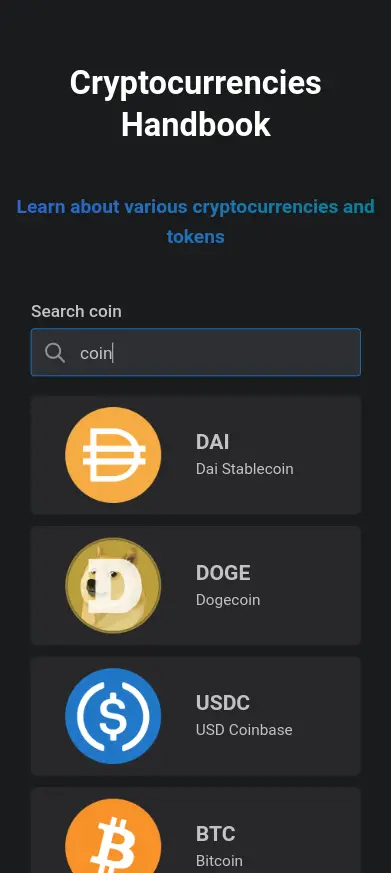
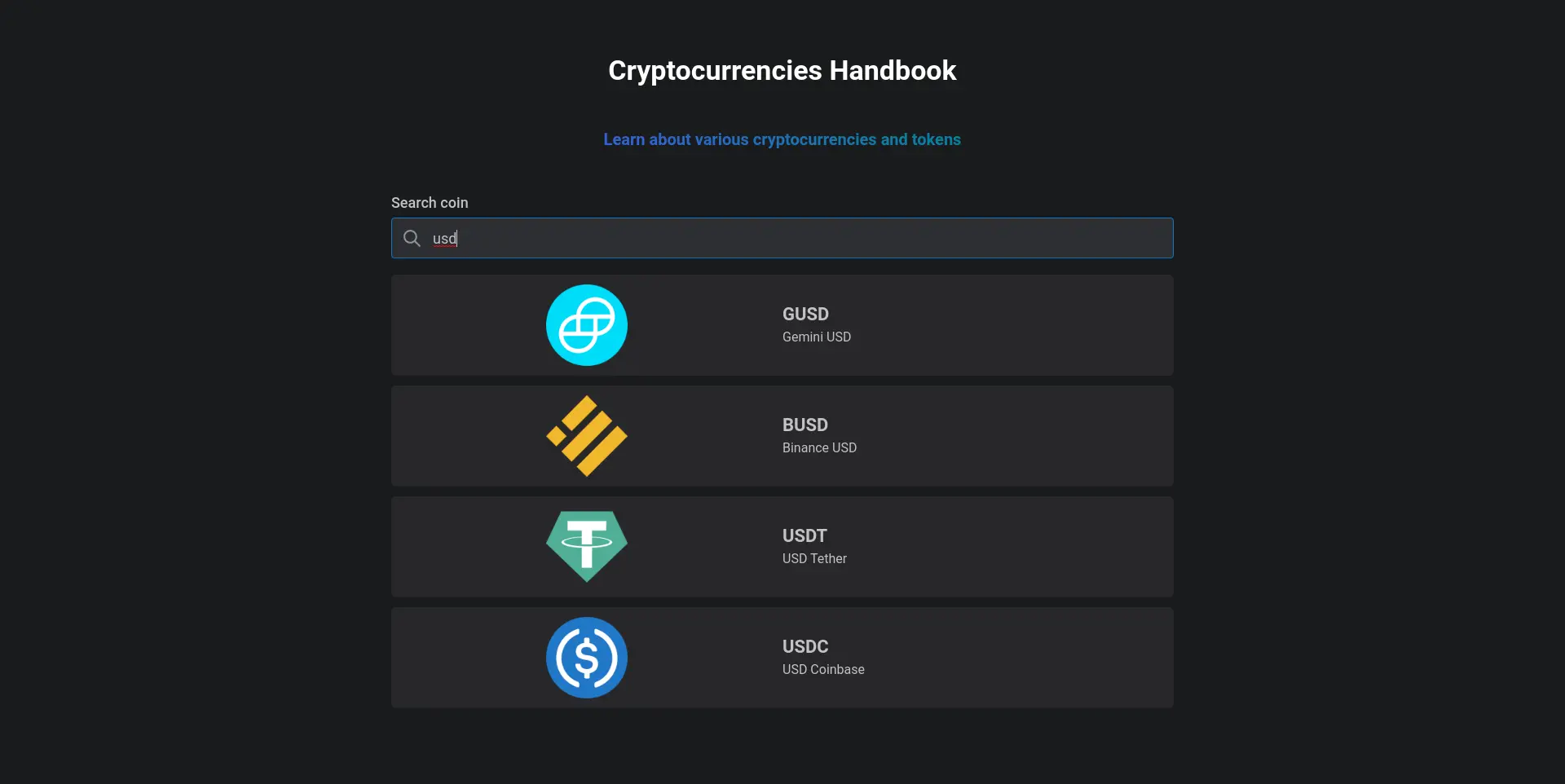
The Project
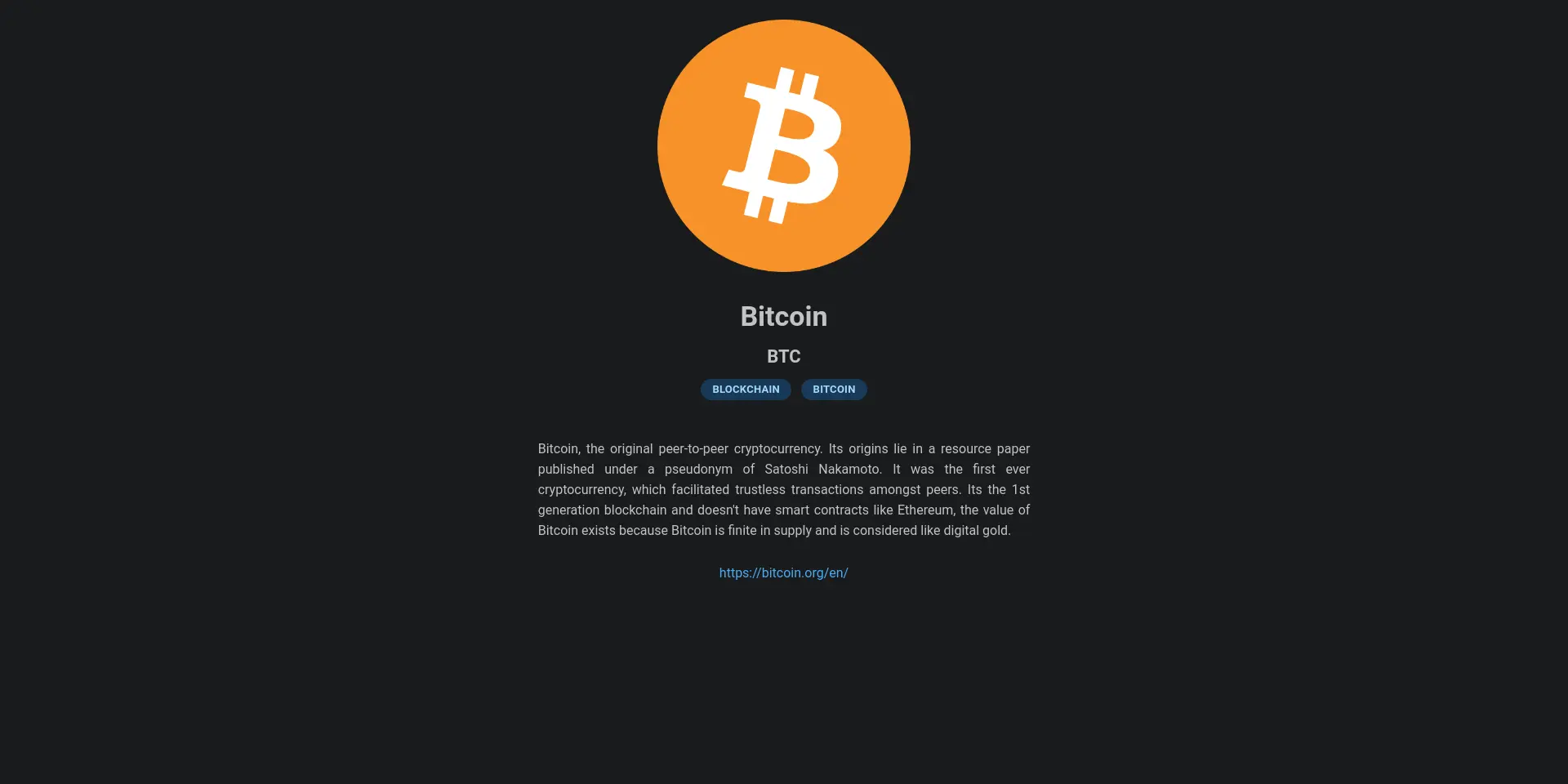
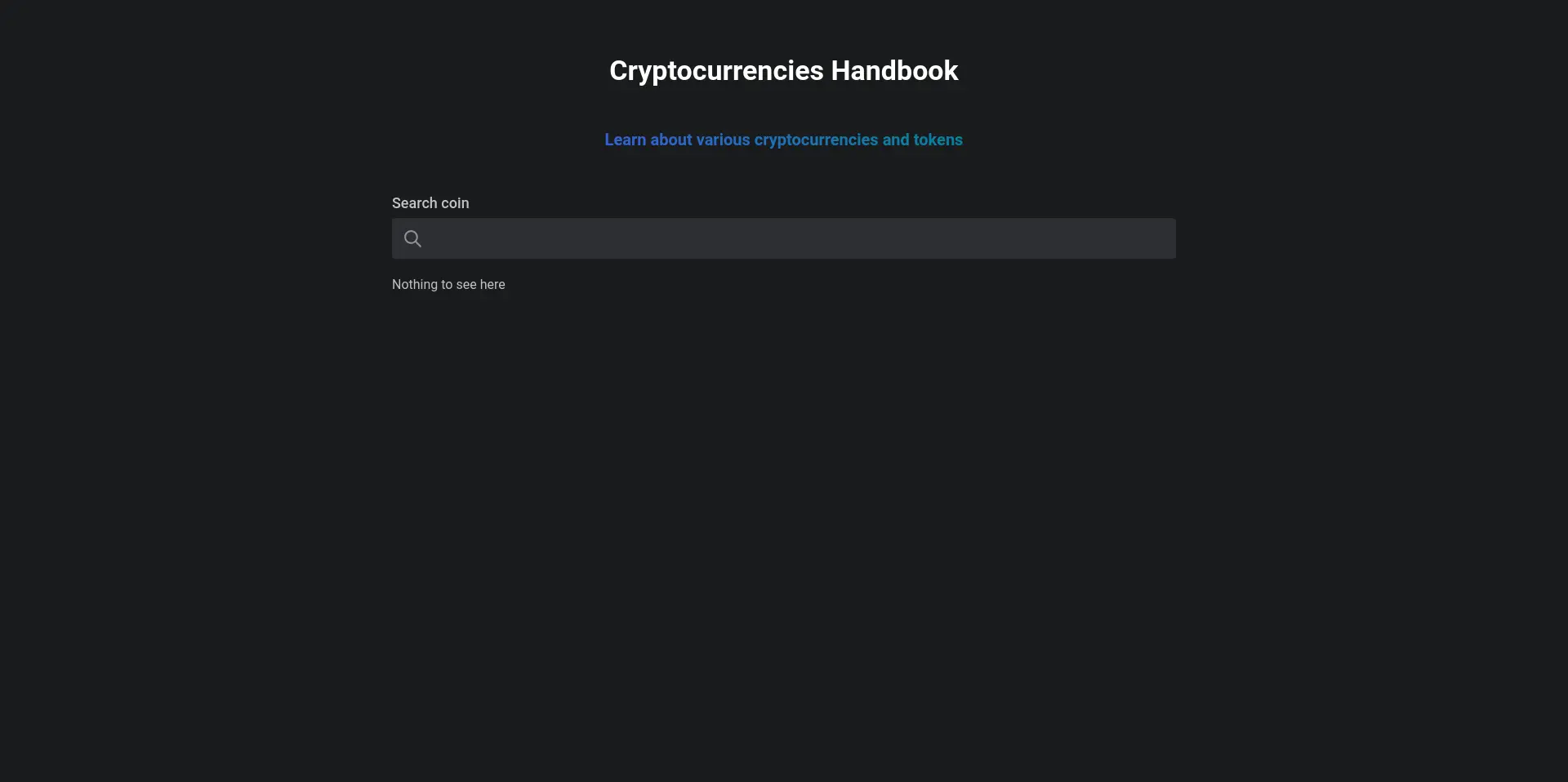
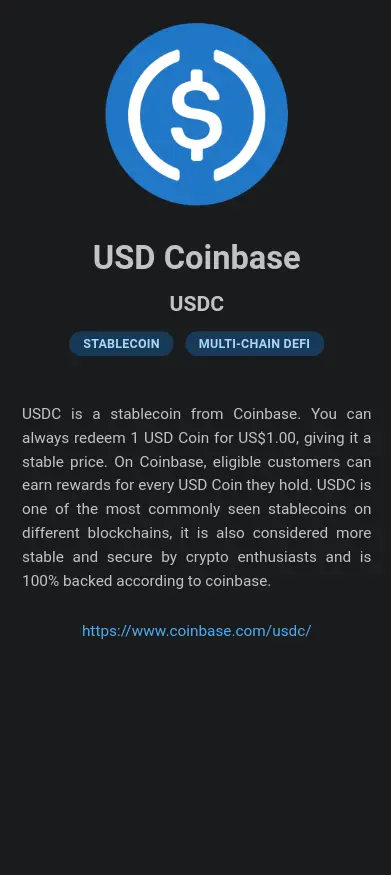
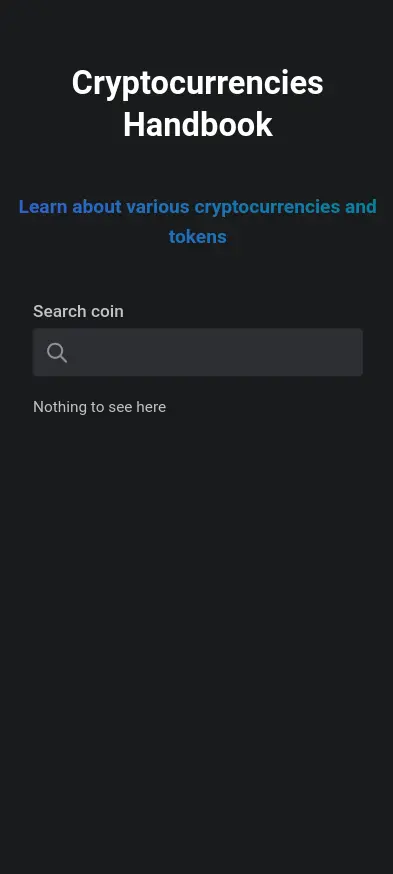
Cryptocurrencies Handbook is a simple token viewer built with Next.js and React. You can search for common coins like ETH, USDT, or BTC, read a short description of each, and follow a link for more detailed information. The token data lives in a local database.ts file rather than calling a live price API, which keeps the app fast and avoids rate-limit concerns for a reference tool that doesn't need real-time data.
I built this as a deliberate learning project to get hands-on with Next.js, React, and the Mantine component library — three tools I wanted to understand properly before using them in larger projects.
Why a Local Database
Most crypto apps fetch live data, which introduces latency, API keys, rate limits, and broken states when APIs go down. For a reference app whose goal is "quickly find basic info about a token," those tradeoffs aren't worth it. A static local database loads instantly, works offline, and never fails due to an external service outage.
This was also an intentional exercise in understanding the difference between what can be dynamic and what should be dynamic. For a description of what Ethereum is, real-time data adds nothing.
What I Learned
This project was my introduction to the Next.js ecosystem and React component patterns. The most valuable lesson wasn't any specific API — it was learning how to read framework documentation effectively and understand the mental model behind server-side rendering versus static generation.
Working with Mantine also taught me how component libraries trade off customization for speed of development, which informed my later preference for utility-first styling with Tailwind when more control was needed.
Building a focused pet project with a narrow scope is a much faster way to internalize a new framework than reading docs alone — the act of having something working that you can touch and modify creates a feedback loop that documentation can't replicate.